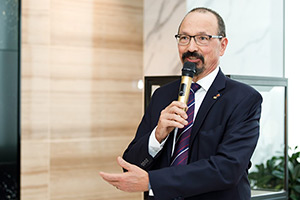

Dwight Mihalicz, TEC Canada Chair, Brent Bolger, Member TEC 663
Selling a business is something many owners think about, but few truly understand until they live through it. The financial mechanics are complex enough, but the emotional and personal dimensions are rarely discussed openly.
In this TEC 663 conversation, Brent Bolger reflects on a 30-year entrepreneurial journey, the role TEC played along the way, what surprised him most about the sales process, and how he is now approaching the next chapter of his life with intention and structure.
What follows is a lightly edited Q&A drawn directly from our discussion.
When you look back over the whole journey, what do you think really made the difference in building the business you did?
Brent:
If I go way back to the beginning, you have to be passionate about what you’re doing. Without that, I don’t think you will last.
You also need a certain amount of business acumen, but the reality is you don’t know what you don’t know when you’re starting out.… (and perhaps that’s a good thing to allow you to start such a venture). There isn’t really a course that gives you everything, because you don’t even know what questions to ask yet. It unfolds in stages.
One thing I learned about myself over time is that I’m a big-picture thinker and I think that’s helpful in entrepreneurship. For me,I need a compass heading… a direction. Don’t just tell me to get on the train. Tell me where we’re going and why. Once I have that info, I can move forward with it.
And when you’re running your own business, you have to make up a lot of that structure yourself. You’re no longer being told when to be at work or what the boundaries are. You have to create those and whatever jobs there are …well you’re that guy …especially when starting out.
As you reflect on it now, were there any moments where your thinking about the business really shifted, where you started to see it differently than before?
Brent:
When I started, I wasn’t trying to build a business. I was just trying to look after our family.
For a number of years, that was the focus, I didn’t think about the opportunity to grow it bigger… I was still in the initial mindset of what I do this

Brent and team at BEI
month looks after us for next month and we had built some financial cushion and we were comfortable.
But then we landed a large contract that pushed us close to a million dollars in sales for that year. That was a threshold moment for me….When I realized we could do $1 million in sales… my second thought was how do I not screw this up and keep it going? It changed my thinking from a “comfortable job” to “what might be possible” with this company. I suddenly realized this could be something more than just an income …. it could be a business I could grow into something much bigger…. This is one of those “aha moments” when you hear the comment… You have to work on your business not in your business… and I think that was the moment for me.
That’s when I brought in an outside consultant through BDC, someone who helped me think strategically and differently. That outside perspective made a big difference for me.
At some point, you went looking for a peer group rather than just finding one by accident. What were you hoping TEC would give you when you first started exploring it?
Brent:
I was looking for a resource of some sort where I could figure out these new ideas for my business… a sounding board. In my life, I have found that when I went looking for these abstract solutions, a lot of times these answers would be provided. There is an expression I like, and it goes like this… ”when the student is ready, the teacher will be provided” . And for me that “teacher” who told me about TEC was a colleague in my industry association. So that is how I heard about TEC and why I sought it out
I didn’t really know what to expect at first, but I knew I needed a sounding board…. A place where I could test out my thoughts or ideas. Sometimes its hard to share your “half baked” ideas with your spouse without getting her concerned…. Often times nothing big , just you trying to work out a solution to a problem. At TEC I got to share these inner thoughts as well as hear what others were navigating themselves. You need a place where you can share ideas and talk some of these things through in a safe space…. That’s what TEC provided for me.
We are a group of very eclectic people in that we are not from the same industry, we are just from business of various sorts… But we get to see the commonalties that most businesses share as they are being developed and grown. Everyone there is an entrepreneur, and we get to observe one another’s business, share challenges and provide accountability to one another. In a lot of ways, we act as this unofficial board of directors for one another ‘s company, taking turns helping navigating our way through these Uncharted waters called – business.
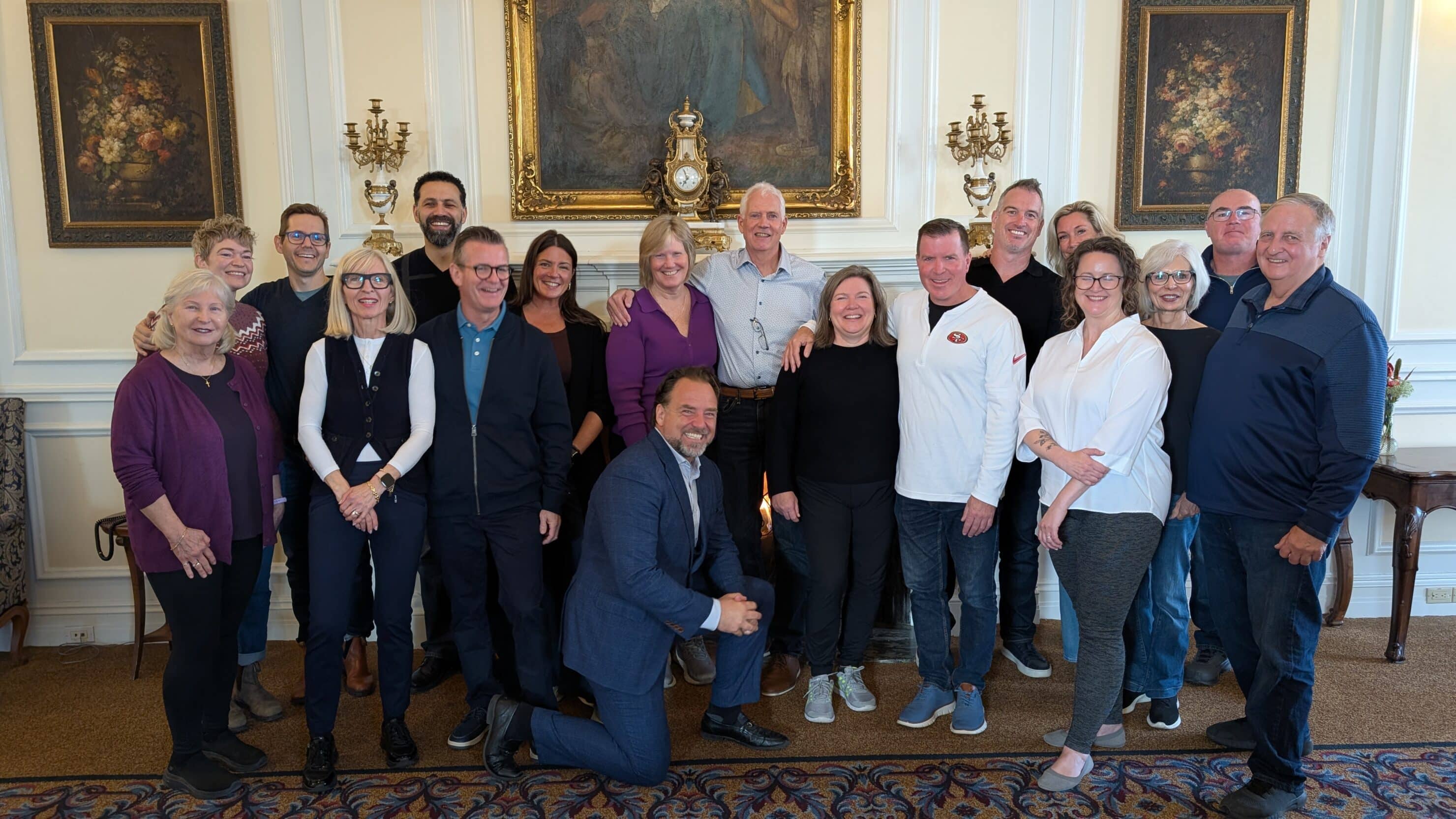
Brent and TEC group with partners at 2025 Retreat
The trust and support and camaraderie are huge. And I would say this very clearly for any new members to TEC: you only get out of TEC if you contribute to it. You have to show up to the meetings and be engaged…. I believe if you do that you and your company will benefit significantly.
Over the years, how did the conversations in TEC actually show up in your decision-making day to day?
Brent:
I wouldn’t say there was one monumental decision that came directly out of TEC.
Business isn’t made up of big milestones most of the time. It’s made up of all the gravel between the milestones.
That gravel might be a people issue, an investment decision, or something you’re just unsure about. TEC gave me a place to test my thinking. People might agree or disagree, and I always made my own decision but I got to see it challenged through more than one lens… And that helps protect you from the blind spots and allows you to build in precautions if required. The difference is, I didn’t jump off the cliff without at least first checking whether my parachute was working.
As you moved closer to selling, how did your TEC group support you through that process?
Brent:
The sale process introduces a whole new language. CIMs, NDAs, LOIs, due diligence, share purchase agreements. At first, it’s like, what the hell is all of this? But you realize it’s just a new landscape you have to learn.
The most valuable point for me was when I had Letters of Intent in front of me. I shared those with TEC members who had bought or sold businesses -so I had people who had been on both sides of these deals…. I now at least had some colleagues I could trust that they had no ulterior motives and were just sharing their best advice.… I wasn’t listening to accountants or lawyers or agents. I was listening to business owners who could imagine themselves in the same position I was in … That Resource certainly helps with peace of mind when making those critical decisions.
When asking for advice during this process, one of the repeated comments was “Once you sign an LOI, that’s largely what you’re going to live with”. I wanted input before I crossed that line. TEC helped me get perspective and confidence that I was making the right call…. And by the way that LOI comment was true in my experience.
Can you take me back to when selling the business first started to feel like a real option rather than just a distant idea?
Brent:
I enjoyed what I was doing. If I was 35, I probably wouldn’t have sold.
Age was a factor. I sold when I was 68, but I started thinking seriously about it about 8 years earlier. I started trying to ask questions to make sure that we were able to put the right legal and family trust structures in place so we had options. I certainly didn’t really know what I was doing, but, that groundwork mattered more than I realized at the time. Finding a tax savvy lawyer, with an understanding of business and CRA rules and interpretations was key for me – we were very fortunate in finding such a person.
I would say that I started looking in earnest about 3 years beforehand when I saw others in my industry selling. I knew some of them and it made selling a real possibility to me.
I didn’t want to be working right up until my last day and I still loved what I did… But I guess I knew it was time.
Once you were in the middle of it, what turned out to be quite different from what you had expected?
Brent:
I thought it would take about a year. It took closer to two.
Timing plays a big role. Markets change. Interest rates change (a big item for acquisitions). Buyers move on. You might think you’re a perfect fit, but if they’ve already acquired what they need, they’re no longer interested. When I started, I thought I had 3 to 5 possible buyers and in the end I sold it to somebody who was not among that original group at all.
I also learned the value of having someone represent you. It’s expensive, but if you have a good individual helping you navigate the process it’s worth it. I think you can make a lot of mistakes going it alone when you’ve never done a deal of this magnitude before… Not saying it can’t be done but for me this gave me a partner to help me navigate in negotiate.
Looking back, what part of the process did you find more demanding than you had anticipated?
Brent:
Due diligence. And private equity groups.
The people we sold to were great to deal with. We could have done a deal on the tailgate of a pickup truck. But private equity brings the intensity way up. Their only job is to manage risk and protect returns, and that drives a lot of scrutiny.
When the accountants are done the financial scrutiny, then the lawyers come in. They’re trained to protect against that “one percent what if scenario”. The problem is you can spend a lot of time (which means money in the legal profession) trying to put guard rails around that one percent…. And that’s happening on both sides… As one law firm raises an issue and then the other counters…. Time and documents and costs can swell pretty quickly.
At some point, it seems the buyer and the seller both have to reel in their lawyers, or the process just keeps going.
After the deal was done, what did you find most difficult about stepping away from something you had built for so long?
Brent:
You have to let it go…. And my wife, often comments, how sometimes we have to grieve these things to let them go… That’s good advice on how to frame this loss… This change.
I cared deeply about my staff and my customers, but once the deal is done, you don’t have control anymore. I made sure I did what I could while I still had control and responsibility, and then I had to accept that it was no longer mine to manage.
There was also guilt. I found myself thinking…”It’s Tuesday and I’m not at work.”… “It’s Thursday and I’m not at work”. Even if you had job flexibility before, that sense of obligation is deeply ingrained. It’s not good or bad. It’s just reprogramming yourself with the change that has happened in your life.
Emotionally, what caught you by surprise as you went through and came out the other side of the sale?
Brent:
Anger on closing day. That really surprised my wife and myself.
On closing day, there were banking delays, and instead of celebrating, my wife and I were angry. Not screaming angry, just tense and worn down angry… you felt you made so many concessions in the deal and now you’re still angry about them… as the seller, I think it’s a little more personal for me because it was my business I grew, but the other side is probably upset as well for whatever concessions they felt they had to make… In the end, if I look in my rearview mirror of life, I guess that might be the sign of a good deal…. Nobody was ecstatically happy on close.
For us, we went out to dinner on the day of the close, and some of the funds were late coming in…. we started the dinner off being angry about the situation, (not at one another), … eventually all the funds arrived… and eventually through dinner that anger slowly dissipated away… It didn’t disappear entirely … (that took additional time), but we moved to a better place of saying, we did a good deal and we should be happy.
Looking back, I think some of that was grief. Anger is part of grieving, and you are grieving something when you sell a business. Even if the deal is good, which it was, but it was still closing a 30 year chapter of my life.
Now that you are in this next chapter, how are you thinking about shaping it in a way that feels purposeful to you?
Brent:
I’ve tried to be intentional about it.
I still wrestle with the term retirement and since I’ve only known Business, I have framed my retirement in somewhat of a business approach. I remember my father said you can’t just retire, you have to have something to retire to.
I have also collected other wisdoms suggesting that this next stage needs to have these other elements in one’s life.
- something relationship
- something physical
- something business-related
- something creative
- something spiritual.
These five items resonated with me and I now call them the five pillars of my retirement.
I’ve turned retirement into a kind of business; not a rigid clock-driven entity, but purposeful. If I’m not touching some of those pillars, I know I’m drifting.
I’ve even given this phase a name: Aetherlude. Not an ending, but a new era. A time to think about what comes next, including how we pass on what we’ve built to the next generation … and that challenge is, how do we do it helping them without harming them.
If you were sitting with an owner who is a few years behind you on this path, what would you want them to know?
Brent:
Be open to what you asked for…
As I mentioned earlier, “when the student is ready, the teacher will be provided”… well I think it works, but you have to be open to get the lesson. Another saying, I heard that I like… “Your mind is like a parachute. It only works when it’s open.… So be open to what you asked for, but don’t be surprised if the package is bigger than you imagined.
A lot of help shows up in serendipitous ways if you let it and you listen for it. It often show up as an offhand comment someone makes that turns out to be exactly what you needed to hear at that moment.
TEC has been part of that for me. If you’re open to learning and willing to listen, the answers tend to present themselves.
Rapid-Fire
One thing you miss about business life?
Interaction with people.
One thing you do not miss?
That sense of obligation taking care of others (staff, clients)
One word for this phase of life?
Aetherlude- a word I made up that speaks to “an era of life lived freely, creatively, and with purpose …”
Closing
Brent’s journey illustrates something many owners sense but rarely articulate: selling a business is not just a transaction. It is an emotional, psychological, and identity-shifting process.
To close this conversation, Brent wrote a short piece that captures the experience perfectly by comparing selling a business to dating. It brings humor, honesty, and clarity to a process that often feels opaque and exhausting.
Learn More
As a TEC Chair, I would be delighted to explore your fit with TEC and help you find the peer group that is right for you, whether that is my group or another across the TEC Canada network. Please feel free to reach out.
Learn more about TEC Canada and all the options for peer groups. If you are the head of the organization, a key executive, or an advancing leader, there is an option for you.