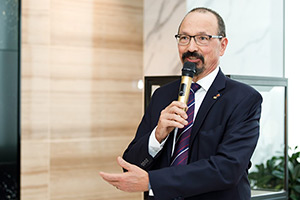
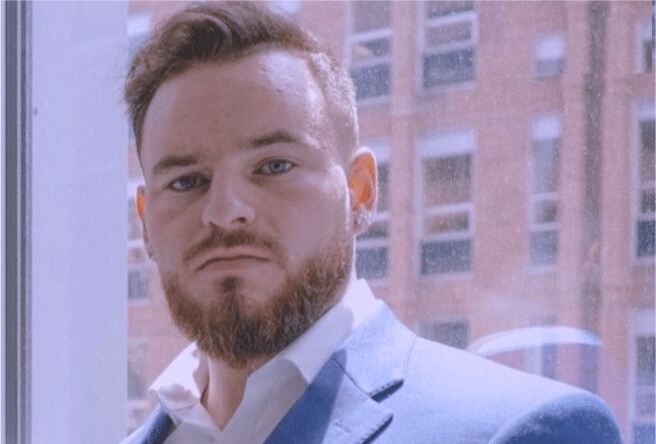
Dwight Mihalicz, TEC Canada Chair, with Travis Moriarty, Co-Founder and President, Prestige Home Improvements
Prestige Home Improvements was recently named the Fastest-Growing Company in Ottawa by Invest Ottawa. Not bad for a company founded in the middle of a pandemic by two entrepreneurs in their early twenties. In this candid interview, I sat down with Travis Moriarty, co-founder and President, to learn more about what it takes to scale with purpose, the leadership mindset behind the growth, and the value of having a strong support network like TEC Canada.
Q: Let’s start at the beginning. What inspired you to start your own company?
Travis: I’ve always been someone who didn’t quite fit into the traditional mould: get a degree, get a job, follow the steps. I was studying to become a personal trainer when COVID hit and everything shut down. Suddenly, my plan disappeared overnight.
For about six months, I floundered. Partying too much, no structure, no purpose. Then, almost by accident, I ended up applying for a job I thought was in fitness. It turned out to be an HVAC sales job. It wasn’t what I expected, but I leaned in and started learning the ropes.
That’s where I met Louis, my now-business partner. We both had that entrepreneurial itch, and after a few jobs where the values of the company we worked for didn’t align, we started comparing notes. One day we both admitted: “I’ve been thinking about starting my own thing.” That was the spark.
We didn’t have a business plan or investors. We just knew we could do it better, with more integrity, and more focus on people. That’s how Prestige started.
Q: Was there a moment when you knew Prestige could become something big?
Travis: Yes—around the 8-month mark. We’d just moved into a real office and hired my brother. The team was starting to form. That’s when the vision shifted from “Let’s get this off the ground” to “We can really build something here.”
At first, we had this limiting belief, based on our past employers, that growing a company meant compromising on values. But as we started to gain momentum, we realized it doesn’t have to be that way. You can scale and stay true to your ethics. You just need a strong team, take care of your customers, and never cut corners.
Once we saw that was possible, our vision got much bigger.
Q: What did success look like in your first year—and how has that evolved?
Travis: At the beginning, it was simple: have multiple offices, expand across Ontario, and build great teams. That core vision hasn’t changed. But what’s evolved is how we plan to get there.
We learned pretty quickly that the people you bring in—especially your leadership—will make or break that vision. You can’t scale without trust. We broke the “don’t hire friends and family” rule—both our brothers are in the business, and so are close friends. But because we had those deep trust relationships, we could build a strong foundation and culture.
Now, our expansion model is rooted in that: build up leaders from within who already get the culture, then bring others in under that framework.
Q: Congratulations on being named Ottawa’s fastest-growing company. What were some inflection points that fuelled that growth?
Travis: Thank you. A major inflection point was expanding into Nova Scotia last August. It was a tough decision. Our systems weren’t perfect, and it was a financial and operational stretch, but the opportunity was too good to pass up.
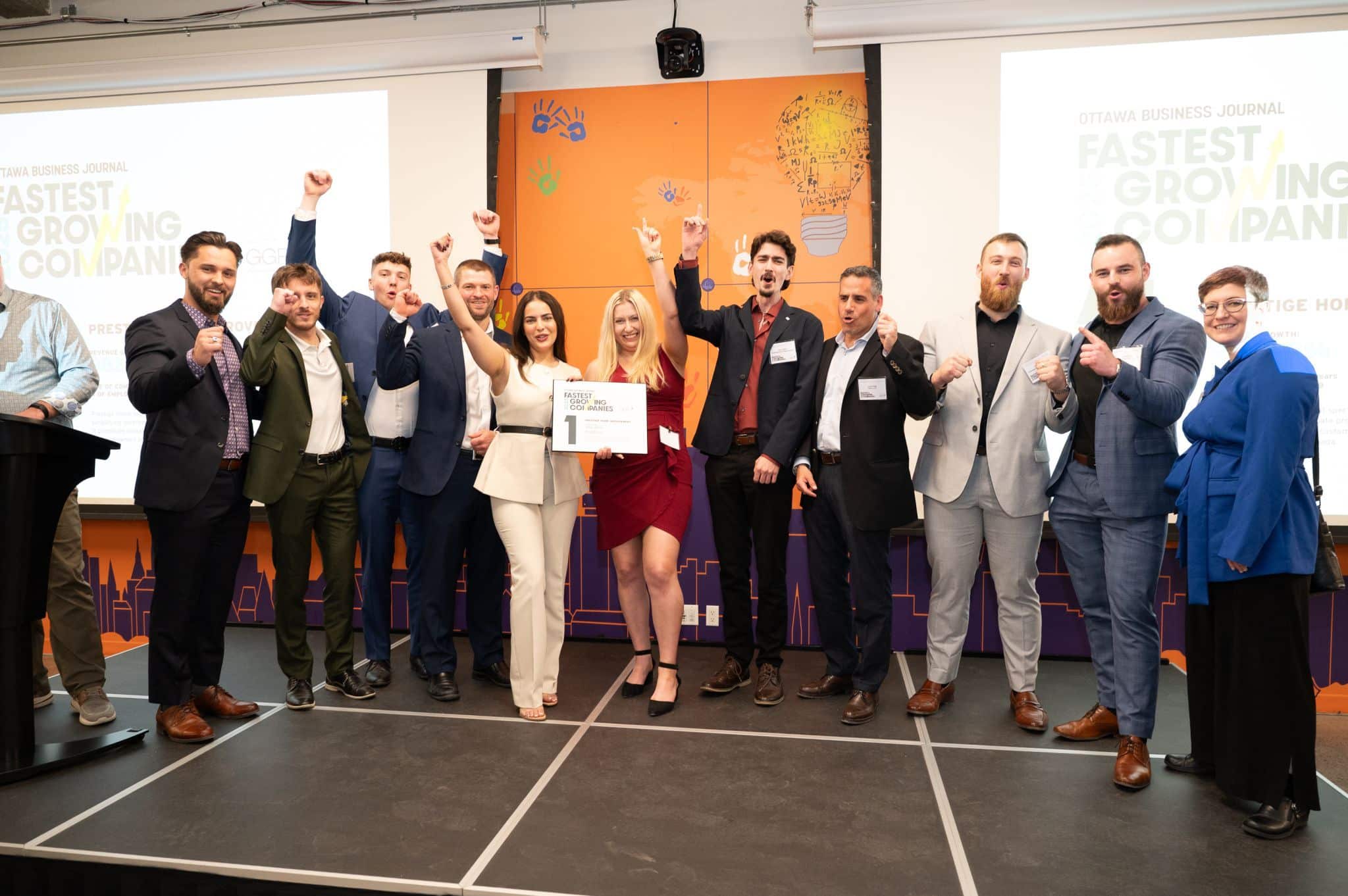
Fast growing companies – Prestige Home Improvement
We sent four of our core people there to seed the culture, and today that office has 24 people. That move forced us to grow up fast. It pushed us to put better systems in place, and it showed us that we could operate in multiple locations without losing what made us special.
Another big driver was recruiting people who truly believe in what we’re building. When people sell the vision even when you’re not in the room – that’s when you know you’re building something real.
Q: How did you keep culture and quality intact while scaling so fast?
Travis: First, we had to define our culture; why it was working, and what values we wanted to protect. It was always there, but we needed to make it explicit.
We involved the team in shaping our core values. We focused not just on performance, but on personal growth. We celebrate wins, support each other, and build leaders from within. It’s a fun place to work, but it’s not for everyone. We’re clear about expectations from day one, and we make hiring decisions based on fit with our values.
When we opened in Nova Scotia, we didn’t just hire a local team. We sent four of our best people to plant the seeds. That decision was key. The culture carried over because it was led by people who lived it.
Q: What systems or disciplines helped you manage that growth?
Travis: We had to formalize things, especially our one-on-ones and leadership development. I started structuring my one-on-ones more intentionally, and Louis took on some as well to keep it personal but scalable. We set goals, track them, and teach our leaders how to conduct one-on-ones themselves.
We also started offering more professional development—bringing people to conferences, setting up peer competitions, and connecting personal dreams to company goals. When people see how their own aspirations align with the company’s growth, they show up differently.
Q: What were some of your toughest challenges so far?
Travis: There were many. Personally, the biggest was realizing that I had to constantly reinvent myself. What works at $1 million won’t work at $5 million. You have to grow faster than your company. That means being okay with not being great at the next level – yet – and staying humble enough to learn quickly.
Cash flow was also a big challenge, especially during rapid growth. And maintaining high standards while managing relationships with friends and family in the company. Navigating that balance is tough. You must hold people accountable without damaging the relationship.
Another challenge was just the loneliness of leadership, especially starting at 22. You end up growing apart from your old friend circles. But that sacrifice opened the door to a new community—people who wanted to build something meaningful.
Q: Was there ever a moment when you thought about giving up?
Travis: Never. There were plenty of moments when I felt overwhelmed or in over my head, but quitting wasn’t an option. It’s not in the playbook. I’d ask myself: “What am I going to do instead?” This is what I want to build.
Louis and I have a great partnership. We lean on each other during hard times, and we have this simple mantra: We’ll figure it out. That mindset has pulled us through every bump in the road.
Q: What advice would you give someone starting out on their own entrepreneurial journey?
Travis: Work in the industry first. Get close to top performers. Learn everything you can. If you’re lucky enough to find a mentor who’ll teach you freely, take full advantage of that.
Also, achieving your goals isn’t as far away as you think. They might take more work than expected, but they’re closer than they feel. And if I could go back, I would’ve built better delegation systems much earlier. You can’t scale without letting go.
Q: What mindset do you think every entrepreneur needs?
Travis: Persistence. That’s it. Don’t give up. If you don’t quit, you can’t lose. The journey might take longer than you expect—or it might surprise you and go faster. But if you stay the course, you’ll get there.
Also, focus. I’ve been guilty of trying to chase too many ideas at once. You end up with a bunch of half-built things. Focus on one thing. Build it to the level it deserves—then you can expand.
Q: You joined TEC 663 about a year ago. What drew you to the group?
Travis: Louis actually got introduced to TEC first. When I learned more about it, it made perfect sense. Entrepreneurs need a place where they can talk openly. Most people around you just don’t get it.
You can’t unload on your friends, your employees, or your family. TEC gives you that space to think out loud, get advice, and learn from people who’ve been there before. It’s like having 12 smart mentors in your corner.
Q: How has TEC impacted you personally and professionally?
Travis: It’s been huge. The issue processing is incredibly valuable—getting input from multiple perspectives helps me see blind spots I didn’t even know I had.
Even when I’m not the one bringing the issue, I learn from others. It’s powerful to hear how people at different stages, some running $2M businesses, others $200M, deal with similar problems in different ways.
Also, our one-on-ones have been really helpful. Your experience in management consulting has helped me think more structurally, especially as I move into new levels of leadership.
Q: Is there a moment or TEC experience that stands out?
Travis: The first time I processed an issue with the group. It was a little intense, not because people were harsh, but because they were honest. I realized I hadn’t taken full ownership of the problem, and seeing those different perspectives helped me grow. It’s moments like that that stick with you.
Q: What would you say to someone considering joining TEC?
Travis: Do it—but go all in. Show up. Participate. Ask questions. You’ll get out what you put in. And go in with humility. Everyone there is trying to grow, just like you.
Q: Finally, what’s next for Prestige?
Travis: We want to be the biggest HVAC company in Canada in the next 10 years. That’s the mission. But beyond the numbers, we’re focused on growing the business while growing ourselves. If we can do that—while staying true to our values—I think we’ll get there.
Learn More
As a TEC Chair, I would be delighted to explore your fit with TEC and help you find the peer group that is right for you, whether that is my group or another across the TEC Canada network. Please feel free to reach out.
Learn more about TEC Canada and all the options for peer groups. If you are the head of the organization, a key executive, or an advancing leader, there is an option for you.