Change is no longer episodic. It is continuous.
The pace of change in today’s world continues to increase. Markets shift quickly. Technology evolves rapidly. Customer expectations change. Competitive landscapes can be disrupted almost overnight. For heads of organizations, this creates a unique and ongoing challenge.
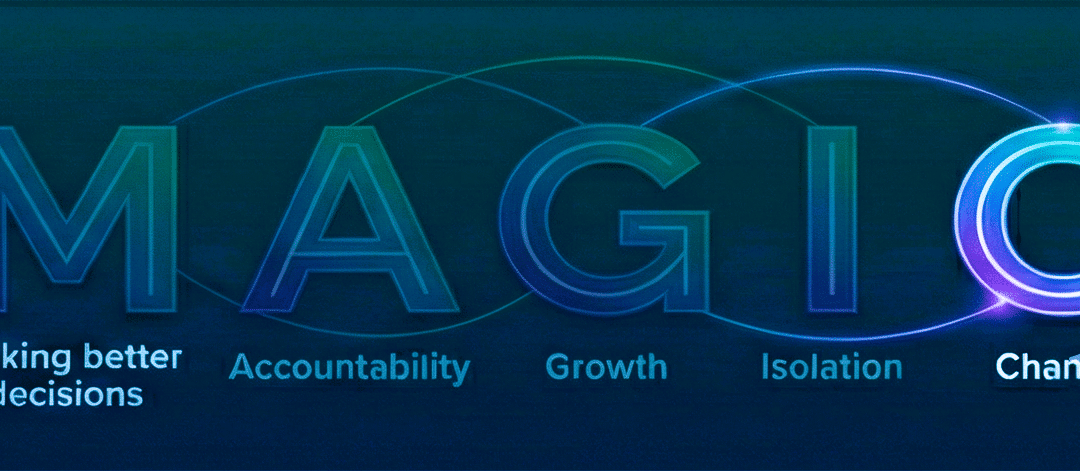
This is why the C in MAGIC matters so much. It stands for Change, and it reflects the reality that leadership today is less about maintaining stability and more about navigating constant movement.
In TEC Canada, leaders are supported in understanding, anticipating, and leading through change in all its forms.
Being ready for disruption
One dimension of change is readiness.
Leaders must stay aware of what is happening in their environment so they can respond quickly when disruption occurs. Sometimes that disruption is external, such as a new competitor, a regulatory shift, or a technological breakthrough. Other times it is internal, such as the loss of a key leader or a sudden change in capacity.
These situations often require decisive action on very short timelines. Having access to peers who have lived through similar disruptions helps leaders think more clearly under pressure and avoid reactive decisions.
Becoming the disruptor
Change is not only something to react to. It is also something to initiate.
Many TEC members are focused on how to improve their position in the marketplace and, in some cases, how to disrupt their own industry. This might involve rethinking the business model, changing how value is delivered to customers, or investing ahead of the curve.
These conversations benefit enormously from peer insight. Leaders can test bold ideas, learn from others who have taken similar risks, and better understand the consequences of moving first versus moving fast.
Managing complexity as organizations grow
As organizations grow, they become more complex. New layers are added. Roles change. Decision-making evolves. What worked at one stage no longer works at the next.
Growth-driven change requires thoughtful design and disciplined execution. TEC groups help leaders see these patterns early and prepare for the changes that come with scale. Members learn how others have adjusted structure, clarified accountability, and introduced new ways of working without losing momentum.
The leader changes too
Change does not only affect organizations. It affects the people who lead them.
As time passes, leaders change how they see the world, their business, and themselves. Experience brings perspective, but it can also surface new questions about direction, priorities, and legacy.
TEC provides a place where leaders can reflect on these shifts openly. Personal change is treated as a normal part of leadership, not a weakness. That openness helps leaders adapt with intention rather than drift.
A Real-World Example
(The following is a fictional case created for demonstration purposes.)
Andrew leads a well-established company in an industry that has been relatively stable for years. Recently, new technology has begun to change customer expectations. What once felt optional now feels urgent.
Andrew knows the organization must change, but the path forward is not clear. Some options feel too incremental. Others feel too risky. Internally, the team is anxious and divided.
Andrew brings the situation to his TEC group.
Peers help him unpack the situation from several angles. Some have navigated sudden disruption. Others have successfully led proactive change before it became unavoidable. The discussion helps Andrew separate what must change immediately from what can be phased in over time.
Andrew leaves with a clearer roadmap and greater confidence in how to lead the organization through the transition. The change is still challenging, but it is no longer overwhelming.
Why change works better with support
Change is inevitable. Leading through it does not have to be isolating or reactive.
TEC helps leaders see change coming, learn from those who have already faced it, and implement it in ways that are sustainable. Whether responding to disruption, driving innovation, managing complexity, or evolving personally, leaders are better equipped when they are not facing change alone.
With that, the MAGIC framework comes full circle. Make better decisions. Stay accountable. Grow deliberately. Remove isolation. Lead confidently through change.
See how change is woven into TEC Canada’s MAGIC overview in the MAGIC article here.
Learn more
As a TEC Chair, I would be delighted to explore your fit with TEC and help you find the peer group that is right for you, whether that is my group or another across the TEC Canada network. Please feel free to reach out.
Learn more about TEC Canada and all the options for peer groups. If you are the head of the organization, a key executive, or an advancing leader, there is an option for you.