Every leader makes decisions that matter. Some are strategic and long-term. Others feel urgent and immediate. What they all have in common is weight. As the head of an organization, the decision ultimately rests with you.
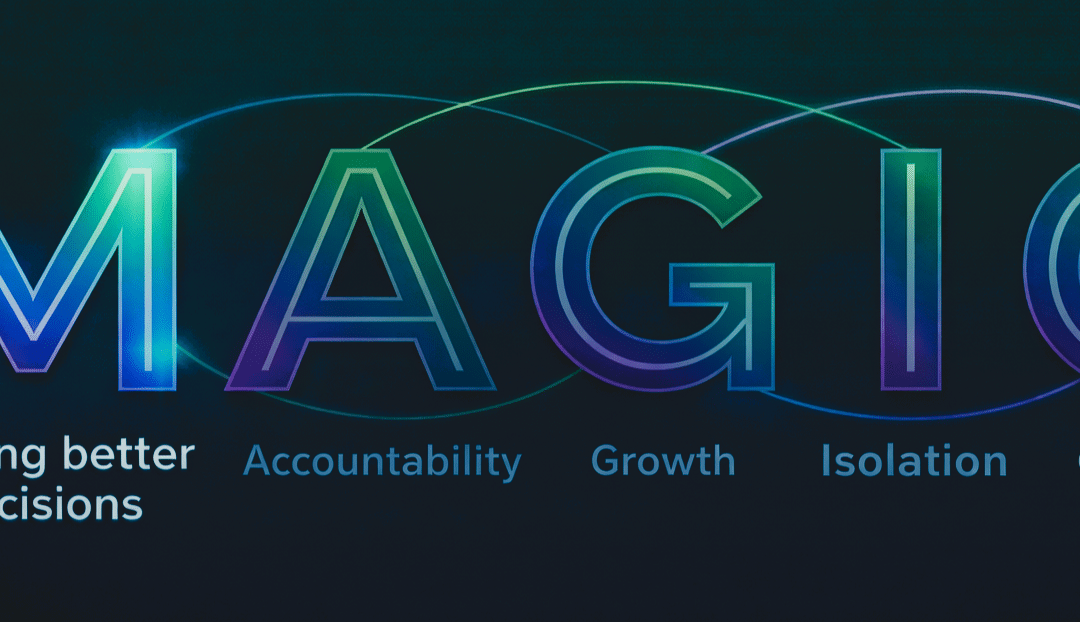
This is where the first element of MAGIC comes to life. The M stands for Make Better Decisions.
TEC Canada groups are designed to help leaders bring real issues and opportunities into the room and work through them with the support of trusted peers. The environment is confidential, non-competitive, and grounded in one shared purpose: helping each other perform better as leaders and build stronger organizations.
A personal board of directors
One of the most common ways members describe their TEC group is as a personal board of directors. Around the table are successful leaders from different industries, different backgrounds, and different stages of growth. What they share is experience, curiosity, and a genuine desire to help.
No one at the table has a stake in your decision beyond wanting to see you succeed. That creates a rare dynamic. You can speak openly about challenges, test your thinking, and explore options without worrying about politics, optics, or internal consequences.
At the same time, you are expected to bring your own experience to the table. Making better decisions is not a one-way exchange. Members sharpen their own thinking by helping others work through theirs.
Different industries, similar mechanics
On the surface, the issues leaders bring forward can look very different. One may be dealing with rapid growth. Another with a key leadership hire. Another with a strategic pivot or a difficult customer situation.
What becomes clear very quickly is that most issues share similar underlying mechanics. Questions of structure, capability, accountability, risk, and timing tend to show up regardless of industry or company size. A leader from manufacturing may see something that resonates with a leader from professional services. A retail operator may recognize a pattern that applies just as well in technology.
This cross-industry perspective is one of the great strengths of TEC. It helps leaders move beyond the details of their own context and see the decision more clearly.
A Real-World Example
(The following is a fictional case created for demonstration purposes.)
Maria is the CEO of a mid-sized organization that has been growing steadily for several years. A new market opportunity has emerged that could accelerate growth, but it would also stretch her leadership team and place new demands on cash flow.
Internally, Maria is getting mixed signals. Some of he management team leaders are enthusiastic and eager to move quickly. Others are cautious, concerned about execution risk and distraction from core operations. As the final decision rests with her, Maria brings the situation to her TEC group.
Rather than jumping to solutions, the group starts by asking thoughtful questions. What problem is the expansion meant to solve? What assumptions are being made about customer demand? Which parts of the organization are ready to scale, and which are not?
As peers share experiences from different industries, patterns begin to emerge. Several members recognize the tension between opportunity and capacity. Others reflect on moments when timing mattered more than ambition. The discussion shifts Maria’s thinking from whether to expand to how to assess readiness.
By the end of the session, Maria has not been told what to do. Instead, she leaves with clearer criteria, a stronger understanding of the trade-offs, and greater confidence in the decision she needs to make. That clarity allows her to move forward deliberately rather than reactively.
Tools, expertise, and disciplined thinking
Better decisions are not just the result of good conversation. TEC meetings combine peer insight with expert input. Guest speakers bring proven methodologies, systems, and frameworks that members can apply directly to their own situations.
Over full-day sessions, leaders have the time and space to step back from the daily rush and think properly. That alone is a rare gift. When combined with structured discussion and relevant expertise, it becomes a powerful decision-making advantage.
Why it matters
Making a better decision does not mean making a perfect one. It means making the best possible decision with the information, insight, and judgment available at the time.
When leaders make better decisions, they move forward with less second-guessing. They free up energy for other priorities. Over time, the quality of those decisions compounds.
For most members, the investment of time in TEC more than pays for itself through one or two decisions that were clearer, more grounded, and better thought through than they would have been alone.
In the next article, we will explore the A in MAGIC and why accountability is the natural companion to better decision-making.
For the complete overview of how decision-making fits into TEC Canada’s MAGIC framework, read the MAGIC article here.
Learn more
As a TEC Chair, I would be delighted to explore your fit with TEC and help you find the peer group that is right for you, whether that is my group or another across the TEC Canada network. Please feel free to reach out.
Learn more about TEC Canada and all the options for peer groups. If you are the head of the organization, a key executive, or an advancing leader, there is an option for you.