The question every CEO eventually asks:
“Why does everything look fine on paper – but still feel off?”
Every head of an organization has had that feeling. The dashboards are green, sales are steady, the numbers make sense—and yet, something deep down feels out of sync. You can’t always pinpoint it, but you know performance isn’t at its peak.
That instinct is rarely wrong. It’s your built-in diagnostic system telling you that something inside the organization’s structure, people, or processes isn’t working as it should.
- The Subtle Signals of Drift
Most CEOs rely on output measures—performance metrics, top-line revenue, or bottom-line profit. These are essential, but they tell you what’s already happened. They are lagging indicators, not early warnings.
Beneath those results are subtle signs that the organization is drifting. When you notice them, it’s time to look below the surface.
Duplication of Effort
Teams start solving the same problem in parallel. Two departments develop similar tools. Sales and marketing keep separate lists. Duplication looks like productivity, but it’s really a symptom of unclear structure.
When roles and accountabilities overlap, energy is wasted. Instead of building value, people protect their turf.
Silos and Poor Collaboration
When departments don’t coordinate, it’s rarely because people don’t want to work together.
It’s because the system doesn’t make it easy – or safe – to do so.
Without clear cross-functional accountability, handoffs become friction points. One function blames another for missed outcomes, and collaboration turns into negotiation.
Decision Delays and Bottlenecks
If decisions consistently move upward for resolution, something is broken in the accountability and authority structure.
People hesitate because they’re unsure whether they have the authority to act. Managers approve what should be delegated. Small issues pile up, slowing response time and dulling the organization’s edge.
These aren’t just annoyances. They are symptoms of deeper design flaws.
- The CEO as Organizational Diagnostician
A good CEO doesn’t just manage the numbers; they read the organization.
That means paying attention to what people aren’t saying in meetings, noticing when discussions feel circular, and sensing when execution starts to take more effort than it should.
This intuitive awareness is powerful, but it needs to be paired with systematic diagnosis.
When intuition tells you something is off, the next step is to ask where in the system the issue lies—and that always comes back to three elements: structure, people, and outcomes.
- Linking Structure, People, and Outcomes
Structure Defines Possibility
Your structure the business model, strategy, and organization design, sets the boundaries of what your organization can achieve.
When the structure doesn’t match the complexity of the work, duplication and bottlenecks appear.
If you want to restore alignment, start with structure. Ask:
- Is our strategy still clear and focused?
- Does our organization design match the strategy’s level of complexity?
- Are accountabilities and authorities clearly defined?
People Drive Performance
Even with the right structure, execution depends on people. If fit to role isn’t right, or if managerial leadership is weak, performance drifts.
Clear structure without capable people leads to rigidity; capable people without structure leads to chaos.
People form the trunk of the organizational tree, the living connection between design and delivery.
Outcomes Reveal Health
Culture, performance metrics, and results are the visible crown of the tree. They show how well the structure and people systems are working together.
If outcomes start to shift – good people leaving, results fluctuating, or energy fading, it’s rarely an “output” problem. It’s feedback from the system that things are not working as well as they should.
- Addressing Drift Early
The earlier you catch organizational drift, the easier it is to correct.
Here’s how effective CEOs stay ahead of it:
- Trust your intuition: If something feels off, investigate it.
- Look below the surface: Identify where structure, people, or outcomes have lost alignment.
- Realign accountability: Ensure every role has clear accountability for deliverables and appropriate authority.
- Strengthen managerial leadership: Make sure managers are planning, delegating, and coaching effectively.
- Revisit organization design: Check that layers, functions, and reporting lines still fit the strategy’s complexity.
Drift never corrects itself.
It compounds quietly until the symptoms reach the surface in the form of missed goals or disengaged teams. The best CEOs don’t wait for that moment. They act when their instincts first whisper, not when the numbers start to shout.
Learn More
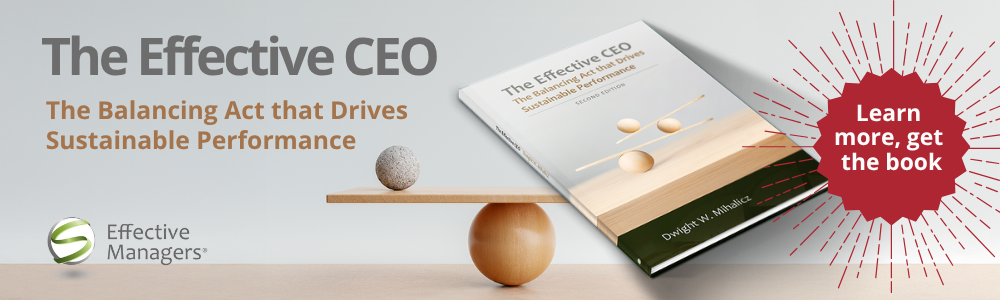
This article draws on The Effective CEO: The Balancing Act that Drives Sustainable Performance.
Get your copy on Amazon to learn how to diagnose your organization’s health and address structural issues before they impact results.