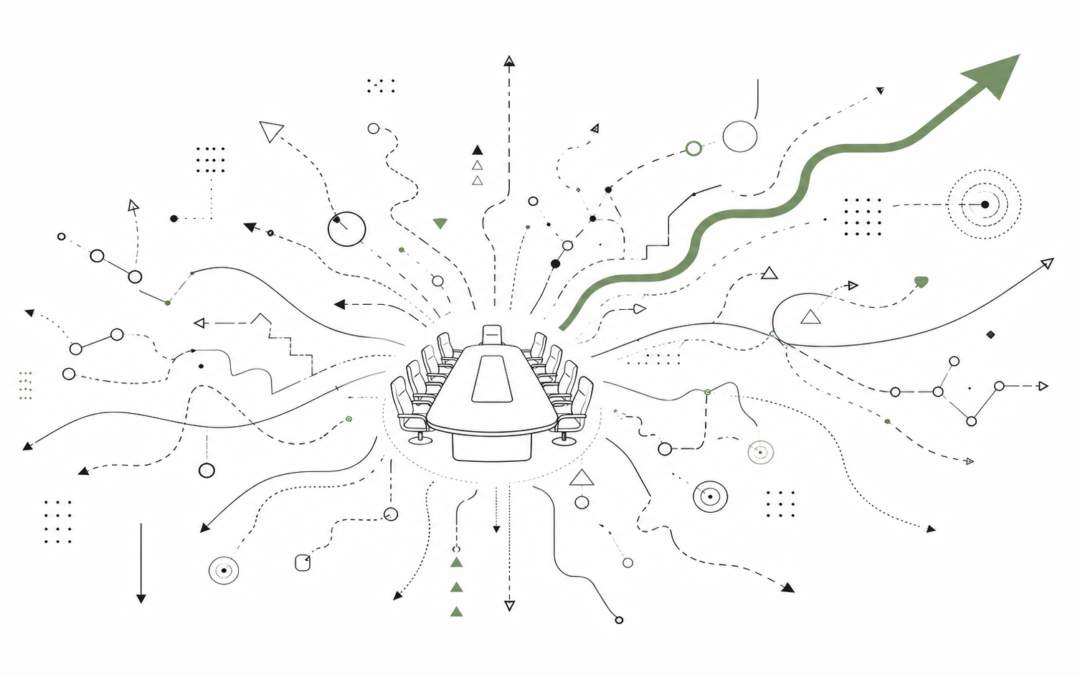
For years, leaders have been told that they are operating in a VUCA world: volatile, uncertain, complex, and ambiguous. It was a useful way to describe the reality of leading when markets were shifting, technology was advancing, customers were changing, and competition was becoming harder to predict.
That language still works, but it may no longer go far enough.
More recently, another acronym has entered the conversation: BANI. Brittle. Anxious. Non-linear. Incomprehensible. That may sound a little dramatic at first, but when you think about the world leaders are now trying to navigate, it does capture something important.
The issue is not whether VUCA or BANI is the perfect model. The point is that the world is becoming harder to read. The pace of change is increasing, the signals are more difficult to interpret, and decisions often have to be made before the full picture is clear.
That puts heads of organizations in a difficult position. They are expected to provide direction when the path ahead is uncertain. They are expected to give confidence to others while carrying real questions themselves. They are expected to move the organization forward while also protecting it from unnecessary risk.
That is not easy. It is also not going away.
The pace of change is now a leadership issue
Change is not new. Leaders have always had to deal with change. What feels different now is the speed of it, the complexity of it, and the way so many issues are connected.
A decision about pricing may affect customer loyalty, employee compensation, supplier relationships, and cash flow. It can also be influenced tomorrow by shifts in regulation, changes in trade policy, or unexpected disruptions in the supply chain. A decision about technology may improve productivity and customer experience today, yet be reshaped by new environmental standards, cybersecurity risks, or evolving compliance requirements. Even a decision to pause may feel prudent in the moment, but external forces such as political changes, resource constraints, or sudden shifts in operating conditions can quickly alter the landscape and leave the organization reacting rather than leading.
This is where leadership becomes more than decision-making. It becomes sense-making.
The head of the organization has to help people understand what is happening, what matters, what does not matter, and where the organization needs to focus. That is difficult when there is so much noise. Economic forecasts, market updates, technology trends, customer signals, employee concerns, and competitive moves all arrive at the same time.
The challenge is not always a lack of information. In many cases, leaders have too much information. What they need is clarity.
And clarity is much harder to find alone.
Waiting can feel safe, but it has a cost
When the future is uncertain, the natural instinct is to slow down. Sometimes that is exactly the right thing to do. Not every opportunity should be chased. Not every investment should be made. Not every new idea deserves immediate action.
Caution has its place.
But there is a difference between being prudent and becoming passive.
Many leaders are tempted to wait until the economy settles, until customers become more predictable, until costs stabilize, or until the leadership team somehow becomes more aligned. The problem is that the organization does not stand still while the leader is waiting.
Competitors keep moving. Customers keep making choices. Employees keep drawing conclusions. Costs keep changing. Technology keeps advancing. Opportunities do not usually wait politely until everyone is ready.
Waiting for perfect clarity can feel responsible. But waiting too long can become a very expensive form of indecision.
In a VUCA or BANI world, the goal is not to eliminate uncertainty. That is not possible. The real goal is to make better decisions in the presence of uncertainty.
The real need is not more advice
Most CEOs, presidents, founders, and heads of organizations are not short of advice.
Employees have opinions. Boards have expectations. Customers have preferences. Suppliers have recommendations. Bankers have questions. Consultants have frameworks. Family members may have concerns, often delivered with love and sometimes with surprising confidence.
Advice is everywhere.
But advice is not the same as clear thinking.
The best leaders do not simply collect opinions. They test assumptions. They examine trade-offs. They look for patterns. They separate symptoms from causes. They ask better questions before they settle too quickly on answers.
That is difficult to do when every significant issue eventually lands on your desk and everyone expects you to know what to do.
The higher you go in an organization, the fewer places there are where you can speak openly. Your team looks to you for direction. Your board looks to you for performance. Your customers look to you for confidence. Your family may care deeply, but they may not fully understand the complexity of what you are carrying.
Leadership can be lonely, not because leaders are weak, but because the role itself is isolating.
That is why the quality of the conversations around the leader matters so much.
In a world that is harder to read, the leader’s advantage is not pretending to have all the answers. The advantage is having a better way to work through the questions.
Many minds can create better solutions
Complex issues rarely have one obvious answer. That is what makes them complex.
One person may see the financial risk. Another may see the people issue. Another may recognize the customer impact. Another may understand the operational constraint. Another may ask the simple question no one inside the company has been willing to ask.
This is the power of a well-run peer advisory group.
The value is not that everyone agrees. In fact, agreement is often overrated. The value is that the right people help you see what you may have missed on your own.
A strong peer group does not take the decision away from the leader. The leader still decides. The accountability remains where it belongs. But the leader makes the decision after better thinking, better challenge, and better perspective.
That is a very different thing.
Why TEC Canada/Vistage International matters now
This is why TEC Canada/Vistage International is so relevant for heads of organizations today.
It is not a networking group. It is not a course. It is not a social club for successful people who already have enough lunches in their calendars.
It is a structured leadership support system.
At the center is the confidential peer advisory group. Members bring real issues to the table. Not polished presentations. Not theoretical case studies. Real decisions, real pressures, real opportunities, and real concerns.
The group helps each member think through what is happening, what matters, what options exist, and what action makes sense.
That peer group is supported by one-to-one coaching with the Chair. This gives the leader a regular place to focus on their own business, leadership challenges, goals, blind spots, and follow-through.
Members also benefit from expert speakers and thought leadership. These sessions bring current ideas, practical tools, and outside perspective into the room. The value is not simply learning something new. The value is applying that learning to the real issues facing the business.
With TEC Canada now part of Vistage International, Canadian members are also connected to an even broader global peer advisory community. That matters because even local businesses are affected by global forces: technology, supply chains, labour markets, inflation, competition, and changing customer expectations.
Local leadership now benefits from global perspective.
The MAGIC is in the conversation
The value of TEC is not simply that leaders gather in a room. The value comes from the kind of conversation that happens in that room.
It is candid, confidential, practical, and grounded in real experience. It is supportive, but it is not soft. Members are encouraged, but they are also challenged.
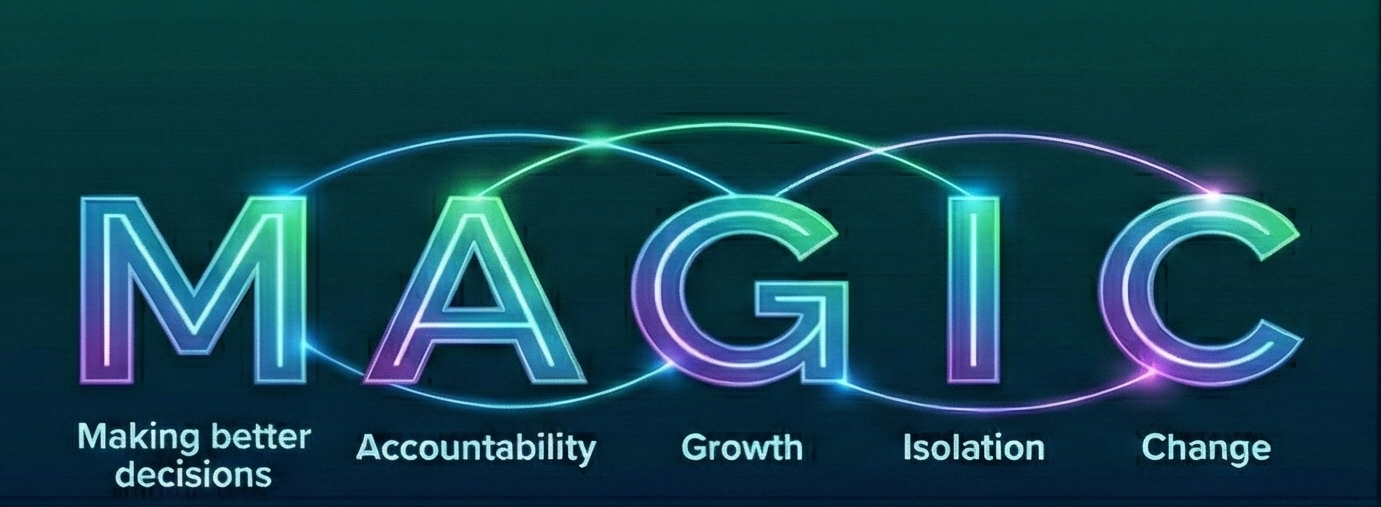
That is where the MAGIC happens.
The first part of the magic is that leaders make better decisions. They are often asked to decide before the full picture is available. A TEC group helps them test their thinking, challenge their assumptions, and make decisions with greater confidence. The group does not provide easy answers. It provides better questions. In complex situations, better questions are often what make better answers possible.
The second part is accountability. Leadership is easier to talk about than to follow through on. A peer group creates a respectful form of accountability. Members are not reporting to each other, but they are known by each other. They bring commitments into the room. They discuss progress. They explain what worked, what did not work, and what they will do next. There is power in being surrounded by people who want you to succeed and who are also willing to ask, “So what are you going to do about it?”
The third part is growth. Growth is not only revenue. It is also judgment, confidence, leadership capacity, organizational capability, and the ability to deal with complexity without becoming overwhelmed by it. A strong leader grows the organization by first growing their own ability to lead. That kind of growth rarely happens by accident.
The fourth part is isolation. The higher the role, the more important it becomes to have a place where you can say, “Here is what I am really wrestling with.” That is not always possible inside the organization. It may not be appropriate with employees. It may not be complete enough with the board. It may not be understood by friends or family. A TEC group gives the leader a confidential place to think out loud with people who understand the weight of the role.
The final part is change. Change is now constant, but leading change is not just about announcing a new direction. It requires judgment, communication, timing, persistence, and the ability to bring people along. A TEC group helps leaders think through not only what needs to change, but how to lead that change in a way the organization can actually absorb.
That is where many good strategies succeed or fail.
Why now?
When conditions are stable, leadership still matters. When conditions are uncertain, leadership matters even more.
This is the time when heads of organizations are making decisions about people, pricing, productivity, technology, cash, customers, succession, structure, and growth. These decisions are too important to make in isolation.
Now is when leadership teams need clarity. Now is when organizations need confidence without false certainty. Now is when leaders need outside perspective before they become trapped inside their own assumptions.
The best time to strengthen your leadership support system is before the pressure becomes obvious to everyone else.
In uncertain times, some leaders pull back and wait. Others use the moment to think more clearly, strengthen their judgment, and prepare their organizations for what comes next.
Those are usually the leaders who are already moving when others are still trying to understand what happened.
But what if you don’t have the time?
One of the most common reasons leaders delay joining a peer advisory group is also one of the most understandable: they do not have enough time.
That is not an excuse. It is a real issue.
Heads of organizations are being pulled in more directions than ever. In uncertain times, more decisions move upward. More issues land on the leader’s desk. More people look to the head of the organization for clarity, confidence, and direction. The busier things become, the easier it is to believe that there simply is not enough time to step away and work on the business.
But that is exactly why the time matters.
TEC members often describe the monthly meeting as one of the few times in the month when they are deliberately working on the business, not just reacting to it. The rhythm matters. Once a month, the leader steps out of the noise, sits down with peers, brings the real issues to the table, and focuses on the strategic work that too often gets pushed aside by the urgent demands of the day.
That repeating cycle creates discipline. It gives leaders a regular place to test decisions, sharpen priorities, review commitments, and make progress on the work that creates real value. It is not time away from the business. It is time invested in leading the business better.
The return on that time can be significant. What is the value of making a better decision? What is the value of moving more quickly because your thinking is clearer? What is the value of avoiding a costly mistake, seeing an opportunity sooner, or finally moving forward on an issue that has been stuck for too long?
TEC Canada reports that 97% of existing peer advisory group members see a meaningful return on investment, and 95% say that TEC group meetings are a high-value part of their leadership. With more than 1,700 members across Canada and more than 45,000 around the world through Vistage International, members are joining a community of successful leaders who are serious about improving their own leadership and the performance of their organizations.
The leaders who benefit most from TEC are often the ones who are already busy. They do not join because they have extra time. They join because their time, judgment, and decisions have become too important to leave unsupported.
Is this the right time for you?
A TEC Canada/Vistage International group may be right for you if you are the head of an organization and the major decisions keep landing on your desk.
It may be right for you if you want to grow, but you want to grow wisely. It may be right for you if you are dealing with complexity that cannot be solved by another internal meeting. It may be right for you if you would benefit from candid challenge, not just encouragement.
It may be right for you if you want to learn from other leaders who are also carrying real accountability. And it may be right for you if you know your organization needs stronger thinking at the top.
The future will not become simple
The world is unlikely to become less volatile, less uncertain, less complex, or less ambiguous. Whether we call it VUCA, BANI, or simply the reality of modern leadership, the challenge remains the same.
Heads of organizations need to make good decisions before the full picture is clear. They need perspective, challenge, accountability, and a confidential place to think.
That is what TEC Canada/Vistage International provides.
If you are based in Ottawa, I would be pleased to help you explore whether one of my TEC Canada/Vistage International groups is the right fit for you. If you are elsewhere in Canada, I can connect you with a trusted Chair in your community.
No pressure. No hard sell. Just a practical conversation about whether this is the right support system for where you are now, and where your organization needs to go next.
Learn more about TEC Canada/Vistage International in Ottawa:
https://tec-canada.com/dwight-mihalicz-ottawa-ontario/
Or email me directly to explore whether a peer advisory group could help you lead with more clarity, confidence, and support:
dwight@effectivemanagers.com